
Last updated 27 October 2026 · By the Rushi Herbs Team
Quick answer: Moringa capsules are dried moringa (Moringa oleifera) leaf powder in a measured dose. The leaf is naturally rich in plant protein, vitamin A (as beta-carotene), vitamin C, calcium, potassium, iron and antioxidants such as quercetin. A typical serving is about 1-2g of leaf powder a day with food (for example two 500mg capsules), following your product’s label.
Moringa – also called the drumstick tree – is grown across India, Africa and Southeast Asia. Its pods are cooked in curries, and its small green leaves have been eaten for generations. Today moringa leaf powder and capsules are sold worldwide as a “superfood”. Here is what moringa actually contains, how it can fit into your routine, and how to choose a good moringa supplement.
What is moringa?
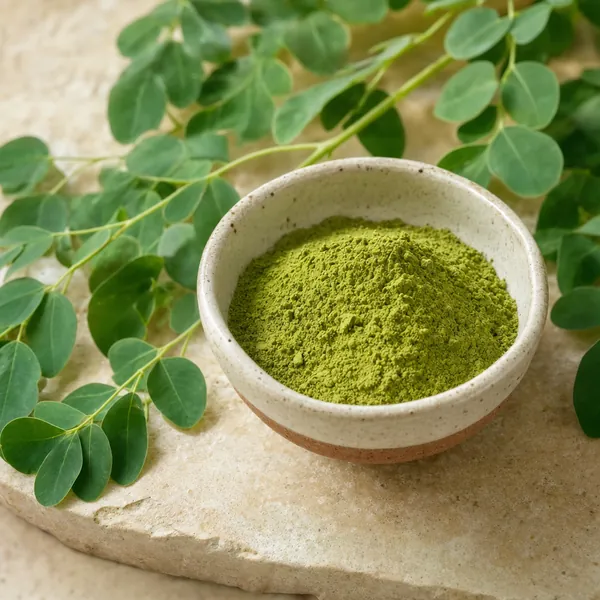
Moringa oleifera is a fast-growing tree native to the foothills of the Himalayas and widely grown across India. Almost every part is used in Indian cooking and traditional practice, but the leaves are the most nutrient-dense part and the one used in most supplements. The dried leaves are ground into a fine green powder, which can be filled into capsules.
What nutrients does moringa leaf contain?
Moringa leaves are a naturally rich source of plant nutrients, including:
- Vitamins such as Vitamin A (as beta-carotene), Vitamin C and several B vitamins.
- Minerals including calcium, potassium and iron.
- Plant protein – unusually high for a leaf.
- Antioxidant compounds such as quercetin, chlorogenic acid and other polyphenols.
The exact amounts vary with how the leaves are grown, dried and stored, which is why a supplement with a clearly stated dose is useful.
How moringa can fit into a healthy routine
- A green top-up: busy schedules often mean fewer leafy vegetables. Moringa is an easy way to add some greens every day.
- Beauty from within: antioxidants and nutrients like Vitamin A and Vitamin C play a role in normal skin health, which is why moringa features in many skin-glow formulas.
- Everyday energy: as part of a balanced diet, nutrient-dense foods support overall vitality.
Moringa is a food, not a medicine. It complements, but does not replace, a varied diet.
Moringa powder vs moringa capsules
| Powder | Capsules | |
|---|---|---|
| Taste | Grassy and slightly bitter | No taste |
| Dose | Varies with each spoon | Measured in every capsule |
| Convenience | Needs mixing into food or drinks | Swallow with water, anywhere |
| Best for | People who enjoy adding it to smoothies, soups or sauces | People who want a consistent daily routine |
How to choose a good moringa supplement
- Leaf, not seed or bark – check that it is moringa leaf powder.
- Clear dose in milligrams per capsule and per serving.
- Vegetarian capsule shell (HPMC).
- GMP manufacturing and a full Supplement Facts panel.
- Bright green color if you buy powder – brownish powder may be old or poorly dried.
Our pick: Rushi Herbs Skin Glow Moringa Capsules – 1000mg of moringa leaf powder per 2-capsule serving (500mg per capsule), in vegan capsules, made in a GMP-compliant facility.
How to take moringa
For capsules, follow the label – for Skin Glow it is 2 capsules a day with a meal. For powder, start with about half a teaspoon mixed into food or a drink and increase gradually. Taking it with a meal is usually most comfortable for the stomach.
Who should be careful?
- Pregnant women – avoid moringa root and bark, and check with your doctor before taking any moringa supplement.
- People on medication for blood sugar, blood pressure or thyroid, as moringa may interact with some medicines.
- Anyone with a medical condition should consult a healthcare professional first.
Moringa capsules benefits at a glance
Moringa capsules are simply dried moringa (Moringa oleifera) leaf in a convenient, measured form. What people value them for comes from the leaf’s nutrients:
- Plant protein – dried moringa leaf is roughly a quarter protein by weight.
- Vitamins and minerals – including vitamin A (as beta-carotene), vitamin C, calcium, potassium and iron.
- Plant antioxidants – such as quercetin and chlorogenic acid.
- Convenience – no grassy taste, a consistent amount in every capsule, and easy to carry.
Moringa leaf capsules, moringa oleifera capsules and moringa pills all describe the same thing: powdered moringa leaf. Moringa tablets are the same leaf powder pressed into a tablet, usually with binders.
How to take moringa capsules: step by step
- Start low. Begin with 1 capsule a day for the first week, so your stomach can adjust.
- Take it with food. Swallow with a full glass of water alongside breakfast or lunch.
- Build up to the label serving. Most moringa leaf capsules contain 400-500mg each, and a typical serving is 1-2 capsules once or twice a day – roughly 1-2g of leaf powder in total. Do not exceed the serving on your label.
- Be consistent. Like any food supplement, moringa is best taken daily for several weeks as part of a balanced diet.
Best time to take moringa
For most people, morning or midday with a meal works best. Moringa contains no caffeine, but many people like it as part of a daytime routine. Taking it with food is gentler on the stomach – large amounts on an empty stomach can have a mild laxative effect.
Moringa capsules vs tablets vs powder
| Capsules | Tablets | Powder | |
|---|---|---|---|
| Taste | None | Slight | Strong, grassy |
| Dose | Measured | Measured | Varies with each spoon |
| Extras | Usually just leaf powder and the capsule shell | Binders and fillers to hold the tablet together | None |
| Best for | Convenience and travel | Lower cost per serving | Smoothies and cooking |
Moringa leaves vs moringa pods (drumsticks)
The long green pods – drumsticks – are eaten as a vegetable in sambar and curries. They are a good source of fiber and vitamin C. The leaves, however, are far more concentrated in protein, calcium, iron and vitamin A, which is why supplements are made from dried leaves rather than pods.
Frequently asked questions
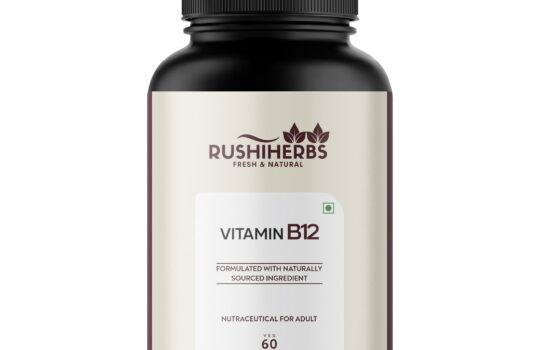
Does moringa contain vitamin B12?
Not in any meaningful amount. Moringa leaf provides vitamin A, vitamin C, several other B vitamins, calcium and iron, but plant foods are not a reliable source of vitamin B12. Vegetarians and vegans should get B12 from fortified foods or a B12 supplement.
Are moringa pills, tablets and capsules the same?
They all contain powdered moringa leaf. Capsules usually hold just the leaf powder in a capsule shell, while tablets are the same powder pressed together with binders. Compare the milligrams of leaf powder per serving.
Is moringa the same as drumstick?
Yes. Drumstick pods come from the moringa tree. Supplements usually use the leaves.
Can I take moringa every day?
Moringa leaf is a traditional food eaten regularly in many parts of the world. Stick to the serving on your product’s label.
Does moringa have caffeine?
No, moringa leaf is naturally caffeine-free.
What is a moringa supplement?
Dried, powdered leaves of the moringa tree, sold as capsules, tablets or loose powder.
How much moringa should I take a day?
Follow your product’s label. Typical servings provide about 1-2g of leaf powder a day, often split between two meals.
This article is for general information and is not medical advice. These statements have not been evaluated by the Food and Drug Administration. This product is not intended to diagnose, treat, cure, or prevent any disease.
About Rushi Herbs
Rushi Herbs is a herbal and nutrition brand from Gujarat, India, shipping free to the USA. Our products are made in GMP-compliant facilities, with every ingredient and dose printed on the Supplement Facts panel. Our guides are written by the Rushi Herbs team to explain ingredients in plain language - they are not a substitute for advice from your doctor.
These statements have not been evaluated by the Food and Drug Administration. This product is not intended to diagnose, treat, cure, or prevent any disease.
More wellness guides
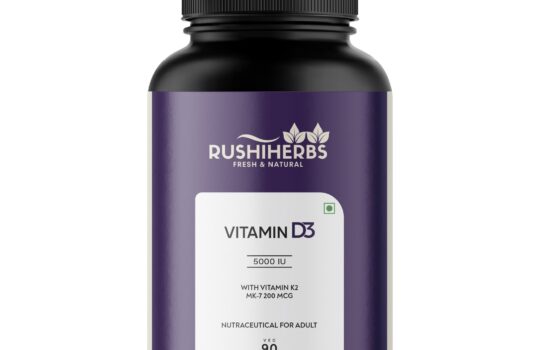
- Vitamin D3 + K2 (MK-7): Benefits, How Much to Take & Best Time
- Vitamin B12 for Vegetarians: Signs of Low B12, Dosage & Methylcobalamin
- Omega-3 Fish Oil: EPA vs DHA, How Much to Take & How to Choose
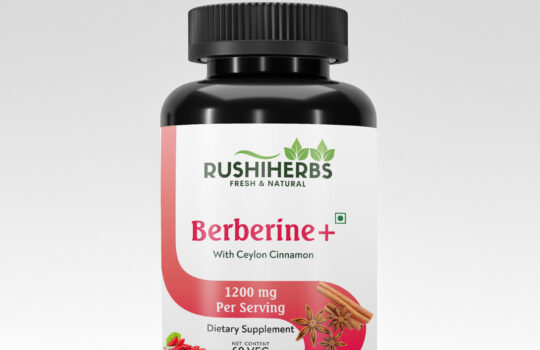
- Berberine: Benefits, Dosage, Side Effects & How to Take It
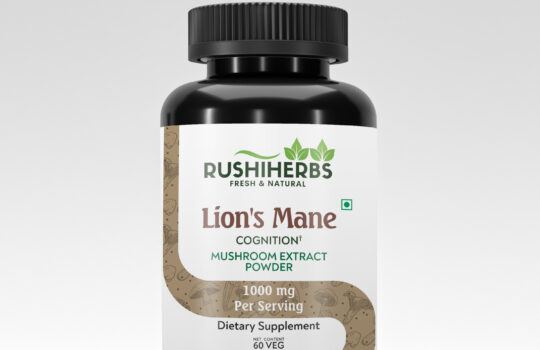
- Lion’s Mane Mushroom: Benefits, Research & How to Take It